Start with the monument, not a search box.
Begin with the familiar name, then explore what you find. The useful discovery may be a place, a person, an object or a document. Knowing which kind of result you've found makes the next question easier to ask.
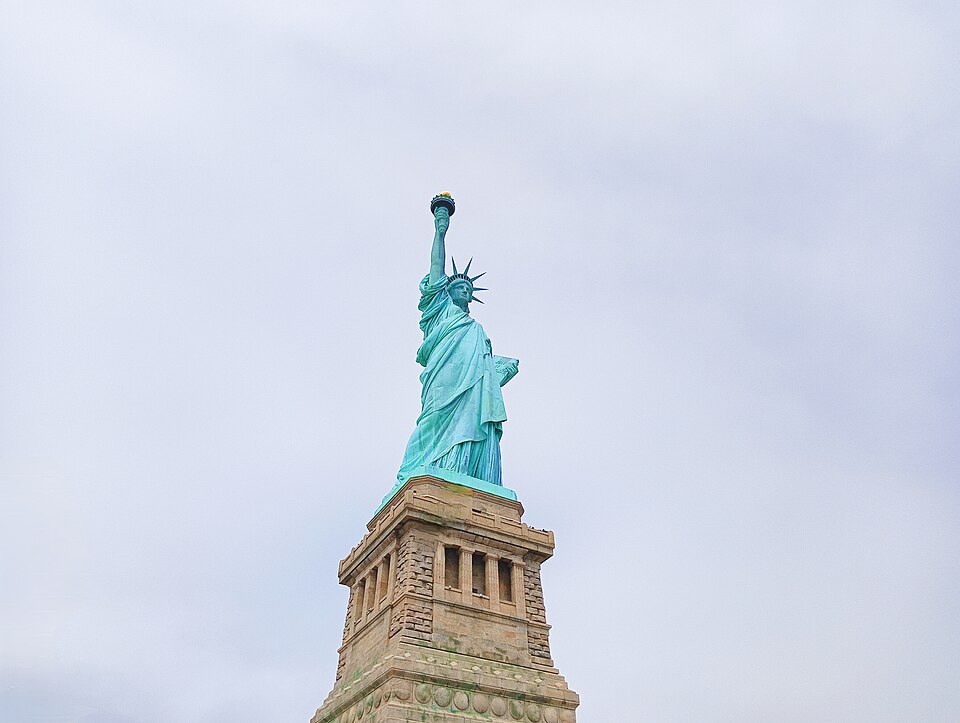
What can a familiar name actually lead you to — a place, a person, an object, or a document?
A search result is not yet an answer. This journey starts with a monument almost everyone recognises and finishes when you can name the specific document that supports what you say about it.
See the subject in Counterpedia Search Counterpedia for Statue of Liberty · Search · results depend on released dataOr begin with step 1 ↓A reading exercise
What did you actually find?
Compare the result inside Counterpedia with the National Park Service page. What does each one let you say?
Counterpedia result
This result is one item in the material Counterpedia has indexed. It is a starting point, not proof that every related document is there.
Search Counterpedia for Statue of Liberty Search · results depend on released dataNational Park Service page
This is the publisher's page about the monument. It tells you where the publisher's material lives; it does not show that Counterpedia kept a copy.
National Park Service · Statue of Liberty Original publisher materialSee the distinction
These links answer different questions: one identifies what Counterpedia returned, and the other identifies the publisher's own page.
Carry this forwardSay what the item is, where it came from, and what you still have not read.
Follow the trail
- 01
Search for the subject
Run the search for Statue of Liberty from the card, and read the type and origin of each result before opening any of them. An entry, a collection, a source record and an original publisher page are different objects with different standing. Decide which object your question concerns: the monument, Liberty Island in New York Harbor, its dedication, its sculptor, or the institutions responsible for preserving it.
Open Search Counterpedia for Statue of Liberty Search · results depend on released data
Keep: The exact question, the search result types, and their stated origins.
- 02
Open the result you actually got
Open the Statue of Liberty result and establish what it is before reading it. Coverage varies with the released data. If Counterpedia has no research entry for the subject, that is a fact about coverage, not a failed search and not evidence that nothing exists. Keep a missing or external source distinguishable from a document you have inspected in Counterpedia.
Open Search Counterpedia for Statue of Liberty Search · results depend on released data
Keep: The result you opened, or a clear note that it is absent from released data.
- 03
Follow to the original publisher
Open the National Park Service Statue of Liberty page, which describes the monument and its setting on Liberty Island. Identify the issuer, the page type and the date, and keep them with the link. A publisher page is not a Counterpedia Source record. Check which of the related objects the page actually addresses, rather than assuming it covers the island, the dedication or the people.
Open National Park Service · Statue of Liberty Original publisher material
Keep: The NPS page's issuer, page type, date, and exact destination.
- 04
Separate the photograph from the evidence
The approved subject image is a credited editorial photograph of the statue. It shows what the monument looks like; it does not establish the monument's history or explain it. Take the question of why the statue is green. The picture shows the colour but not the reason, so any explanation has to come from a document. Look for a source that addresses it, and if the material you reach does not, record that as a limit instead of inferring an answer from the image. If you want to know why the statue is green, the National Park Service FAQ answers it directly; read that answer rather than inferring it from the photograph.
Open National Park Service · Statue of Liberty FAQ (why the statue is green) Original publisher material
Keep: One visual observation kept separate from a document-supported explanation.
- 05
Record what lets the result be revisited
Keep four things separately identifiable so that the result can be found again: the result type, the original system it came from, the identity of the subject, and the documentary destination you followed. If you cannot say which of these a particular result is, return to the search before you cite it. Note any known coverage limitation beside them.
Open Search Counterpedia for Statue of Liberty Search · results depend on released data
Keep: Result type, origin, subject identity, and documentary destination—four distinct labels.
- 06
Write one supported sentence
Finish with one sentence that you can defend from the publisher page, attributed to the National Park Service as issuer. Then add one thing you could not establish from what the release contains, such as a related object that search did not return, or an explanation, like the reason the statue is green, that the material you opened does not give.
Open National Park Service · Statue of Liberty Original publisher material
Keep: One NPS-attributed sentence and one expressly unresolved question.
Open the material
- Search Counterpedia for Statue of LibertySearch · results depend on released data
- National Park Service · Statue of LibertyOriginal publisher material
- National Park Service · Statue of Liberty FAQ (why the statue is green)Original publisher material
Research material is not admitted evidence; publisher links identify someone else’s document.
What to notice
- A search result is a pointer; an entry is an authored object; a Source record is a registered identity.
- A credited photograph shows the monument but is not a historical source for its history or its explanation; why the statue is green is a question for documents, not for the picture.
- Absence of an entry is a coverage limit, not a conclusion about the world.
- The monument, Liberty Island, its dedication, its sculptor and the institutions that preserve it are related but distinct objects.
- A missing or external source is not the same as a document you have inspected in Counterpedia.
A useful finish
A source-specific statement naming the National Park Service as issuer, with its page type and date, plus an explicit note about what the release could not establish. If you asked why the statue is green, the result either names the document that answers it or states plainly that the material you reached did not.
Worked example
Observed on 4 November 2026 on the public site, signed out. This is what one actual run of these steps produced.
The U.S. National Park Service's Statue of Liberty National Monument page says the statue was dedicated by President Grover Cleveland on October 28, 1886.
Why the statue is green stayed open in this run: the home page calls it patina green but does not explain the colour.
What it rests on
- National Park Service, Statue of Liberty National Monument home page (nps.gov/stli), stamped “Last updated: May 4, 2026”, read on 4 November 2026.
- Counterpedia's photograph of the statue, typed “Source record · image”, which records no passages.
What it did not establish
- This run found no National Park Service document or explanation of the colour in the Counterpedia searches it tried.
- The page's “Last updated” stamp may not date every statement on it.
Later check, 5 November 2026: The National Park Service FAQ (page stamped “Last updated: March 26, 2026”), which the Searching chapter already links, answers the open question: the statue's copper has naturally oxidized into the green patina. It was a brown, penny-like colour when completed in 1886 and took about thirty years to oxidize fully.
If it stops
- Search returns only released material, and coverage varies; a missing result proves nothing about the subject.
- The photograph is credited editorial content. It does not establish the monument's history or explain, for instance, why the statue is green.
- A name-based search does not establish that every related object, such as the island, the dedication, the people or the institutions, is present in the released Counterpedia data.
- A result list that mixes subject pages, documents and summaries can leave the identity of the cited object unclear; this journey keeps the result type and origin attached to each result.
Go deeper
Before you go deeper: The first chapter, Searching Counterpedia, continues this task with the same subject and question: it searches for the Statue of Liberty and asks why the statue is green.