Two crashes. A software system. A certification trail.
The Lion Air and Ethiopian Airlines investigations examined different events. The FAA-chartered review and congressional inquiry considered other parts of the aircraft's development and oversight. Exploring these connections can reveal the people, organizations, decisions and documents involved, while keeping the different findings distinct.
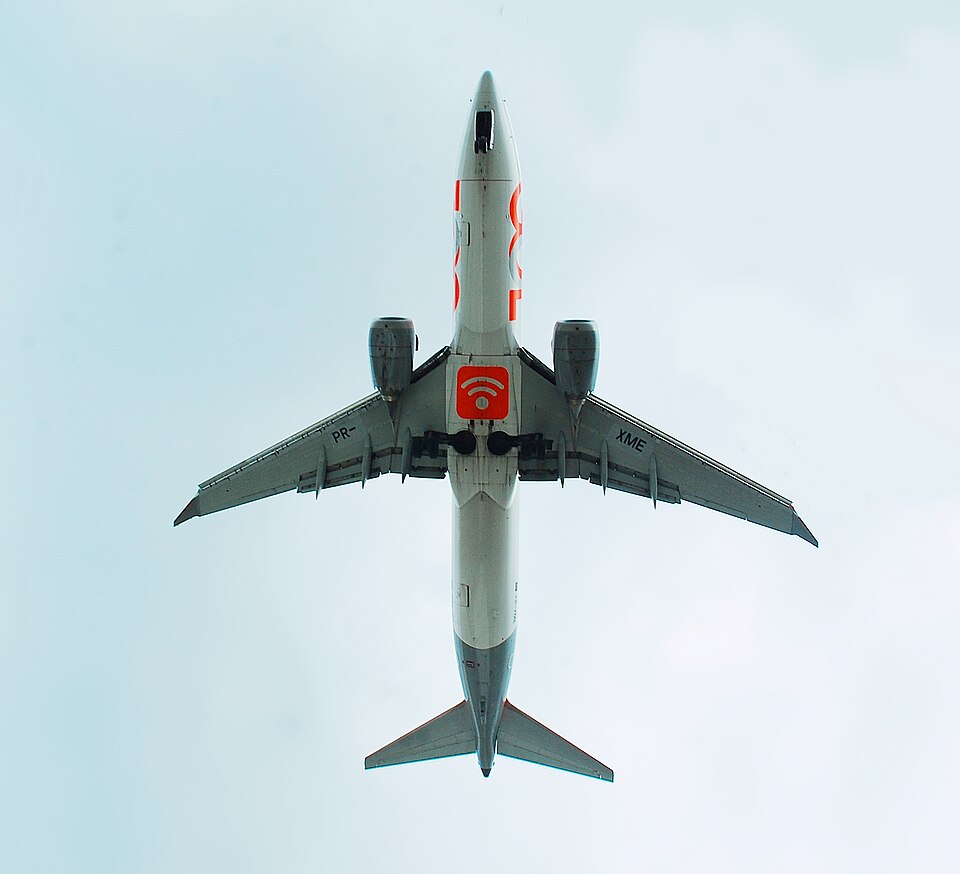
How do two accidents, several investigations and one manufacturer connect — without merging their findings?
Connections are easy to draw and hard to support. This journey follows one aircraft through its inquiries and stops at the point where a relationship needs a recorded basis before it can be asserted.
See the subject in Counterpedia Boeing 737 MAX · research Entry · Research · not admittedOr begin with step 1 ↓A reading exercise
Four investigations, four questions
Compare the two accident reports and explain why one report cannot stand in for the other, including what the product can and cannot currently show you.
KNKT JT610 report
This report concerns Lion Air JT610. The product's dated note says this KNKT address was not retrievable when checked on 14 October 2026; do not turn that historical note into a current availability claim. Keep its investigating body, accident and question together.
KNKT · JT610 final accident investigation (2019) Original publisher materialEAIB ET302 report
This report concerns Ethiopian ET302. The same aircraft family does not make this the same accident investigation.
EAIB Ethiopia · ET302 final investigation (2022; BEA mirror) Original publisher materialSee the distinction
The JATR review and House inquiry ask still different questions. A link between research items can help you navigate, but it is not proof that the documents agree or prove a cause. If the prototype does not show relationship direction, qualifiers or origin, record that gap and treat the comparison as partial.
Carry this forwardKeep the people, event, institution and document connected without turning a connection into a conclusion; a partial comparison is not a completed graph result.
Follow the trail
- 01
Start at the Boeing research dossier
Open the Boeing 737 MAX research dossier. It is research material and is marked not admitted, so treat it as a map of leads and not as evidence. Read the question it poses, and note which institutions and documents it names, before following any link out of it. The dossier tells you where to look; it does not tell you what the documents establish.
Open Boeing 737 MAX · research dossier Research · not admitted
Keep: The dossier's question and a list of documentary leads, marked research-only.
- 02
Keep the two accidents separate
Lion Air Flight JT610 crashed on 29 October 2018 and Ethiopian Airlines Flight ET302 on 10 March 2019; the two accidents killed 346 people. KNKT investigated the first and EAIB the second, so treat each final report as its own document. The product's dated note records the KNKT address as not retrievable there when checked on 14 October 2026; that is a historical access qualification, not a current availability claim. If you can open a report, record its issuer, date and stated scope, and do not carry a finding from one report into the other.
Open KNKT · JT610 final accident investigation (2019) Original publisher material
Open EAIB Ethiopia · ET302 final investigation (2022; BEA mirror) Original publisher material
Keep: Two distinct report records for KNKT/JT610 and EAIB/ET302, with issuer and scope.
- 03
Compare the oversight documents
Open the FAA-chartered Joint Authorities Technical Review, which examined flight-control design and certification, and the U.S. House Transportation majority staff report, which reviewed design, certification and oversight. They have different issuers, mandates, evidence and conclusions. Ask which institution issued each finding, rather than blending them into one account.
Open FAA-chartered JATR · 737 MAX flight-control and certification review (Oct 2019) Original publisher material
Open U.S. House Transportation majority staff · 737 MAX final investigation report (Sep 2020) Original publisher material
Keep: Separate issuer, mandate, and scope notes for the JATR and House reports.
- 04
Test a candidate relationship
Open a linked research object; the linked set is a research prototype that presents candidate relations. Select a relationship and record the direction, qualifiers and stated origin when the prototype exposes them. If any of those fields is unavailable, mark it unavailable rather than filling it in. Treat the result as a navigational or structural assertion unless documentary support is separately established. A shared subject is not proof of a shared cause.
Open Boeing · linked research objects Linked research prototype · candidate relations
Keep: A candidate relationship with exposed fields recorded and missing fields marked unavailable.
- 05
Finish with one connection and one refusal
When the prototype exposes the needed fields, state one connection the documents support, naming its direction, origin and supporting document. If it does not, make a clearly partial document comparison instead: name each report's issuer and scope, record the unavailable relationship fields, and state one connection you decline to assert because no admitted basis exists. Keep the full graph-relationship goal marked incomplete; a partial comparison is not a completed graph result.
Open EAIB Ethiopia · ET302 final investigation (2022; BEA mirror) Original publisher material
Keep: One supported connection or labeled partial comparison, plus one connection you refuse to assert.
Open the material
- Boeing 737 MAX · research EntryResearch · not admitted
- Boeing 737 MAX · research dossierResearch · not admitted
- Boeing · linked research objectsLinked research prototype · candidate relations
- Certification and FAA oversight · candidate articleLab · candidate only
- EAIB / NTSB / BEA disagreement · candidate articleLab · candidate only
- KNKT · JT610 final accident investigation (2019)Original publisher material
- EAIB Ethiopia · ET302 final investigation (2022; BEA mirror)Original publisher material
- FAA-chartered JATR · 737 MAX flight-control and certification review (Oct 2019)Original publisher material
- U.S. House Transportation majority staff · 737 MAX final investigation report (Sep 2020)Original publisher material
Research material is not admitted evidence; publisher links identify someone else’s document.
What to notice
- A shared manufacturer is not a shared cause.
- A candidate research relationship is not admitted evidence.
- An investigation's scope is part of what it can establish.
- Accident investigators, a technical review and an oversight inquiry are different classes of institution; their documents have different mandates and are not interchangeable.
- A graph edge records direction, origin and qualifiers; it does not by itself establish agreement, causation or evidentiary support.
A useful finish
One documented connection stated with its direction, origin and supporting document, and one explicitly refused connection with the reason no admitted basis exists. If the product does not show a relationship's direction, origin or qualifiers, finish instead with a labelled partial comparison that names what is missing. Each statement names the institution that issued the underlying finding.
Worked example
Observed on 4 November 2026 on the public site, signed out. This is what one actual run of these steps produced.
A partial comparison of four official documents, each kept to its own issuer and scope: Indonesia's KNKT final report (October 2019) covers Lion Air JT610; Ethiopia's EAIB final report (December 2022) covers Ethiopian Airlines ET302; the FAA-chartered JATR review (11 October 2019) examines flight-control certification, not accident causes; the U.S. House Transportation Committee majority staff report (September 2020) examines design, development and certification oversight.
One refusal: KNKT's JT610 findings are not carried over to ET302.
What it rests on
- KNKT final report KNKT.18.10.35.04 (322 pages), read from the copy published by Ireland's Air Accident Investigation Unit, which the Boeing dossier lists as a mirror; the KNKT address itself did not respond.
- EAIB report on ET-AVJ (331 pages), from the copy hosted by France's BEA.
- JATR report submitted to the FAA (71 pages), from faa.gov.
- House committee final report (245 pages), from GovInfo.
What it did not establish
- Counterpedia's linked view shows no relationship direction, qualifiers or origin, so no graph connection is asserted.
- The mirrored KNKT copy is not shown to be byte-identical to the unreachable original.
If it stops
- Candidate relations stay candidates; this journey does not admit them.
- Separate reports about one aircraft do not become a single institutional finding, and this journey does not reconcile their conclusions.
- Counterpedia research links and candidate graph relationships do not by themselves establish admitted evidence or a common institutional conclusion.
- The failure this journey guards against is a network connection repeated as if it were a factual claim or a causal explanation.
Go deeper
Before you go deeper: The first chapter, Browsing the knowledge universe, teaches browsing with a different example, the Statue of Liberty, not Boeing. Use it for the method (choosing a collection, opening an object and inspecting a recorded relationship), then return to the Boeing documents with that method. A relationship you inspect there tells you nothing about Boeing.