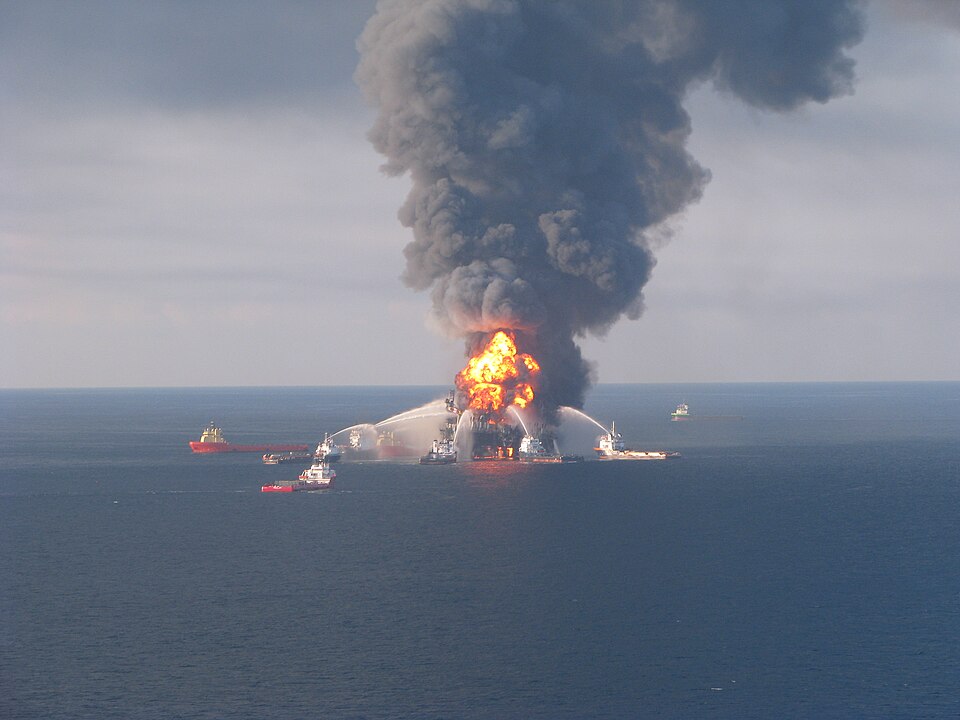
An offshore explosion led to several different investigations.
The report has an issuer, a date and a particular scope. Those details let you identify which findings and institutional responsibilities it covers, cite the inquiry you actually examined, and distinguish it from other investigations into the same event.
Which report are you actually reading, and who issued it?
Most source errors are not fabricated links; they are misidentified documents. This journey follows one investigation from an account to a specific report and keeps the issuer attached.
See the subject in Counterpedia Deepwater Horizon · research Entry · Research · not admittedOr begin with step 1 ↓A reading exercise
Follow a report without assuming you read it
Compare the product's notes about the report with the publisher's destination. What did you actually inspect?
BOEMRE source trail
Counterpedia's research notes identify the BOEMRE joint-investigation report and its scope. They are notes about a document, not the report's pages.
Deepwater Horizon · source inventory and research dossier Research · not admittedPublisher page
The publisher's address is where the report may be found. If you open it, compare its title, issuer and date; if a field differs, reconcile the discrepancy against the inspected document and edition rather than assuming a different report. The address alone does not show that Counterpedia kept or read it.
BOEMRE · Report on the causes of the Macondo well blowout (14 Sep 2011) Original publisher materialSee the distinction
A citation helps you find a report; it does not turn into a copy of the report.
Carry this forwardCite the report you actually examined and say separately whether it was only a link.
Follow the trail
- 01
Begin at the source inventory
Open the Deepwater Horizon source inventory and research dossier. It lists documentary leads and is research material, not admitted evidence. Read the inventory before opening anything, so you know which inquiry each document belongs to. The explosion of 20 April 2010 produced separate technical, safety and governmental investigations into the Macondo operation, and their documents are not interchangeable.
Open Deepwater Horizon · source inventory and research dossier Research · not admitted
Keep: An inventory of documentary leads with the separate inquiries identified.
- 02
Identify the report
Open the Bureau of Ocean Energy Management, Regulation and Enforcement report on the causes of the Macondo well blowout, which sets out the bureau's findings from its joint investigation with the U.S. Coast Guard. Record the issuer, the date and the scope stated on the document itself, and note what falls outside that scope.
Open BOEMRE · Report on the causes of the Macondo well blowout (14 Sep 2011) Original publisher material
Keep: The BOEMRE report's issuer, date, mandate, and stated scope.
- 03
Open the original destination
Follow the publisher link and confirm that you reach the issuing body's own document, not a secondary summary or another inquiry's report. Check the issuer, title and date against what you recorded. If a field differs, record and reconcile the discrepancy against the document and its edition; a mismatch alone does not prove that it is a different document. Establish which document and edition you inspected, then cite that copy precisely.
Open BOEMRE · Report on the causes of the Macondo well blowout (14 Sep 2011) Original publisher material
Keep: The publisher copy or edition you inspected, with any discrepancy noted.
- 04
Check what Counterpedia retains
A link to a publisher is a locator, not a retained copy. Note whether you are reading retained bytes, an archived copy, or a locator to someone else's document, and note the custody status. Keep the reference, the issuing document, the edition you inspected, the custody status and any assessment distinctly identified; they are not one object.
Open Deepwater Horizon · research Entry Research · not admitted
Keep: A custody label for the bytes you actually accessed, separate from the locator.
- 05
Cite it precisely
Write the citation with issuer, title, date and destination, and state which copy you actually read. Add the scope the report states for itself. A citation that names the event but not the inquiry cannot be checked, because one event can be the subject of several investigations with different mandates.
Open BOEMRE · Report on the causes of the Macondo well blowout (14 Sep 2011) Original publisher material
Keep: A citation with issuer, title, date, edition, destination, and report scope.
Open the material
- Deepwater Horizon · research EntryResearch · not admitted
- Deepwater Horizon · source inventory and research dossierResearch · not admitted
- BOEMRE · Report on the causes of the Macondo well blowout (14 Sep 2011)Original publisher material
Research material is not admitted evidence; publisher links identify someone else’s document.
What to notice
- A Source reference is not a retained copy.
- The issuing body is not the archive that hosts the file.
- One event can have several investigations with different scopes.
- A reference, a publisher, an edition and a retained object can collapse into one apparent document; this journey keeps them apart.
- A source locator or citation is not proof that Counterpedia has retained the underlying bytes.
A useful finish
A source-specific citation that names the issuer, title, date and destination, states the scope the report gives itself, and says which document you read and where it lives. The custody status is noted separately from the citation.
Worked example
Observed on 4 November 2026 on the public site, signed out. This is what one actual run of these steps produced.
Bureau of Ocean Energy Management, Regulation and Enforcement, Report Regarding the Causes of the April 20, 2010 Macondo Well Blowout, September 14, 2011, 217 pages. Copy read: the PDF on bsee.gov, retrieved 4 November 2026, SHA-256 1327eb9d…8552.
Scope, from the report's introduction (PDF page 15): the Departments of Homeland Security and the Interior convened a joint BOEMRE and Coast Guard investigation on April 27, 2010; this report is based on that team's investigative record and contains the BOEMRE panel's findings and conclusions.
What it rests on
- The issuer, title and date come from the report's own title page; the page count from the file.
- Counterpedia's card for this document (DWH-S03) matches the issuer and page count and gives the date as “September 2011”.
What it did not establish
- This public source trail did not provide a retained copy; the report was read from BSEE. The product's recorded Coast Guard address could not be opened in this run, so the two copies are not shown to be the same file.
- Counterpedia's title adds “— Volume II”, which the report's title page does not carry.
If it stops
- Retained bytes and retained-text permission are separate questions.
- This journey does not establish that every inventory item is publicly retrievable.
- The inventory and dossier are research material and not admitted evidence.
- One report is an issuer's account within its own mandate; it does not settle what other inquiries into the same event found.
- Counterpedia connects records without replacing the authority of their original publishers.
Go deeper
Before you go deeper: The first chapter, Exploring sources and references, stays with Deepwater Horizon but works from other inquiries' documents (the Coast Guard's investigation directory, the National Commission's report and the Chemical Safety Board's investigation) and from Source Atlas. The BOEMRE report you cited here is one of several separate inquiries.